Top chipmakers embrace ASML’s $400M machines, agree to crucial chipmaking change
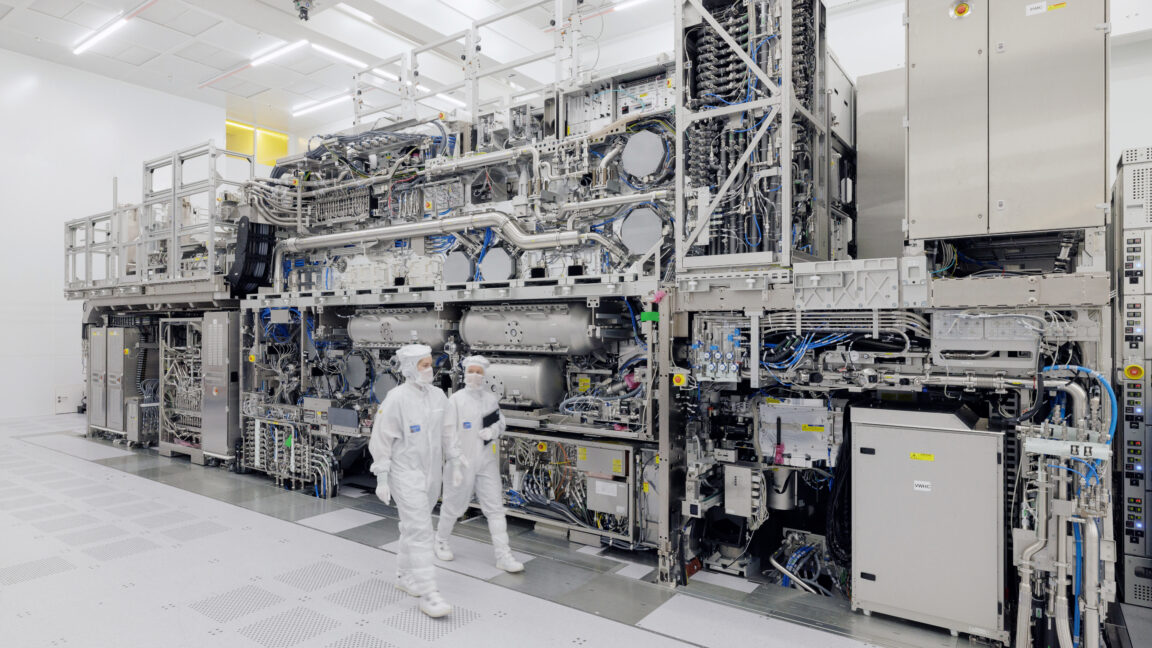
Samsung and TSMC said they will adopt ASML's high-NA EUV lithography machines, which cost up to $400 million each, and joined Intel in accepting a technology change to boost output by 40%. The move could enable smaller, more efficient chips for AI and consumer devices.
Related Tech News
AI CuratedIntel Leaps 2-4 Years Ahead Of Samsung And TSMC On High-NA EUV Lithography After Producing Its 1 Millionth Test Wafer
According to UBS, Intel's progress on high-NA EUV lithography and EMIB-T advanced packaging puts it ahead of Samsung and TSMC by 2-4 years. Intel has produced its 1 millionth test wafer, and UBS believes it can meet MediaTek's growing TPU demand for EMIB-T packaging, with capacity to package over 2 million substrates by 2028. The industry is increasingly optimistic about Intel's execution and yields.
Huawei drives China’s push to make advanced chips
Huawei is investing in domestic chip equipment, notably Yuliangsheng's DUV machine, aimed at advanced chip manufacturing. The effort involves testing at SMIC and Huawei's own lines, with a goal of reducing reliance on ASML and western export controls.
(PR) TSMC and ASML Announce Initiative to Pioneer Industry Transition to Large-Format Photomasks for High NA EUV
TSMC and ASML announced a joint initiative to lead the industry transition to larger-format (12-inch) photomasks for High NA EUV lithography. The move aims to increase fab productivity, lower chipmaking costs, and remove stitching constraints, enabling more cost-effective future chip generations.
TSMC to start using High-NA EUV lithography in 2030 — A10 or A11 technology prime candidates for use
TSMC has confirmed plans to adopt High-NA EUV lithography starting in 2030, initially with conventional 6x6-inch photomasks and later moving to 6x12-inch masks via a pilot line in 2031. The company did not specify which node will first use the technology, but A10 or A11 are considered strong candidates, and TSMC is working with ASML on the industry-wide transition.