Astonishing mod runs DLSS 5 on a second GPU to boost neural-rendered FPS up to 127% — game renders on one card, neural post-processing runs on the other, much like dedicated PhysX GPUs
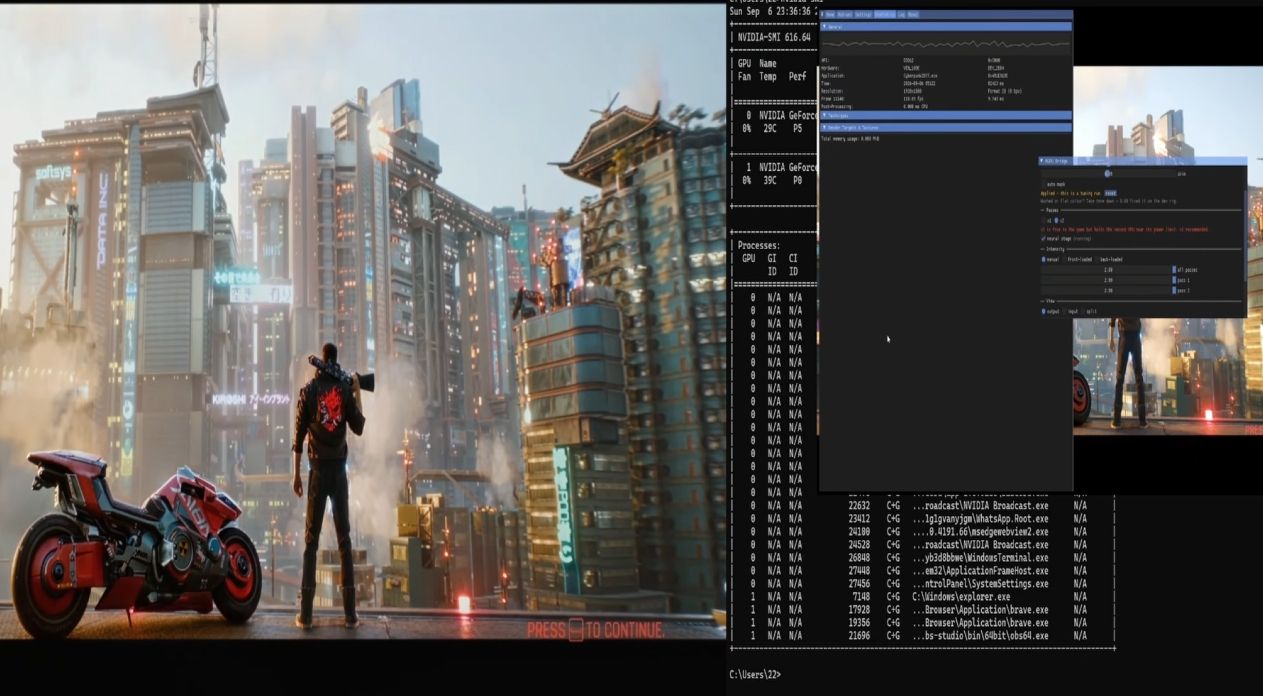
Marcelo Guibout's MGPU Bridge lets a second Nvidia RTX 5060 Ti handle DLSS 5 neural post-processing while the primary GPU renders, roughly tripling the frame-rate gain from DLSS modes and running the render GPU 21°C cooler. It requires a second display, doubles latency, and is available on GitHub.
Related Tech News
AI CuratedOpenAI’s GPT-6 Astra model autonomously completes Portal in 24 hours — feat cost just $571 in tokens
CozyBlaze's experiment saw OpenAI's GPT-6 Astra finish all of Portal autonomously through MCP and a modified SourcePauseTool, with the game paused while the model planned moves. Edited highlights run about two hours; full VODs span roughly 24 hours. The run cost $571 in tokens, covered by a Codex Pro subscription, and is not offered as a formal benchmark.
CHUWI’s UniBox AI495 Pro Crams 192 GB RAM And Ryzen AI Max+ PRO 495 Into A 2.9L Box, Running 300B LLMs Locally
CHUWI's flagship mini PC targets local AI workloads with the Zen 5-based Ryzen AI Max+ PRO 495 and up to 192GB unified memory, of which up to 160GB can be allocated as VRAM. The 2.9L box joins recent mini PCs from Minisforum and GMKtec using the same processor.
User Demonstrates Offloading DLSS 5 Neural Rendering To The Second RTX 5060 Ti Using ReShade Add-On, Restoring Original Performance
A modder has shown that DLSS 5's neural rendering can be run on a second GPU via a ReShade add-on, recovering performance on the primary card. The technology had previously been unofficially enabled on older RTX and AMD Radeon GPUs. This dual-GPU setup suggests the potential for multi-GPU configurations to offload DLSS 5, making the 'more you buy, more you save' marketing relevant.
(PR) DRAM Industry Revenue Rises 59.5% QoQ in 2Q26 as Supply Expansion Continues to Lag Demand Growth
TrendForce reports 59.5% QoQ growth in DRAM industry revenue in 2Q26, reaching nearly $154.73 billion, as AI server demand for HBM3e, LPDDR5X, and high-capacity RDIMMs outpaces supply expansion.