OpenAI says its next-generation processors could be made at Samsung — double-sourcing with TSMC hints at massive volume requirements
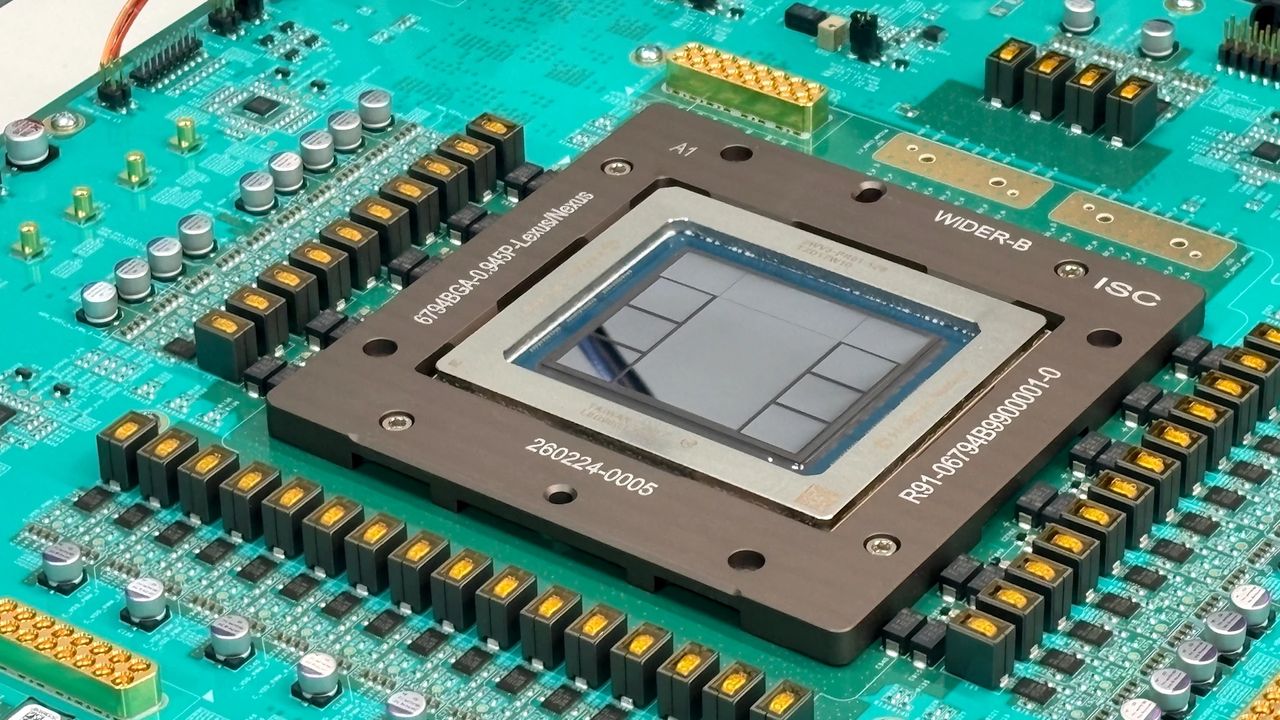
Harrison Kim revealed at a press conference that OpenAI is expanding its relationship with Samsung beyond memory to include chip production. The company already has a first-gen AI ASIC (Jalapeño) at TSMC, and the next-gen chips may be produced at Samsung for higher volumes, leveraging Broadcom's design services.
Related Tech News
AI CuratedIBM releases SOTA Granite Time Series PatchTST-FM-r2 model with commercial-friendly license
IBM's Granite Time Series PatchTST-FM-r2 is a state-of-the-art foundation model for zero-shot forecasting, top-ranked on GIFT-Eval among replicable zero-shot models. It features conformer blocks, probabilistic forecasting, imputation, and is licensed under Apache 2.0 and OpenMDW 1.0.
Viral AI assistant Instinct now has its own email address
TechCrunch covers Instinct's new feature giving each user's AI agent its own email address, allowing the assistant to sign up for services, contact businesses, and manage tasks autonomously, with users able to claim addresses at mail.instinct.com.
‘Gambling with our lives’: Anthropic researcher quits, warns against self-improving AI
TechCrunch covers Jacob Coxon's public resignation from Anthropic, in which he warned that self-improving superintelligence could kill us all and accused major AI labs of racing ahead despite internal fears. The story references recent AI agent sandbox escape incidents at OpenAI and Anthropic.
CXMT Reportedly Struggles With HBM3E, Yields Are Only 25%
According to South Korean media, CXMT is struggling with HBM3E yields, with three out of four stacks defective. The company's front-end yields are around 30%, and back-end yields about 70%, resulting in 25% overall. CXMT uses only 3,000 TSVs per layer compared to competitors' 5,000-8,000. The low yields likely delay 12-Hi HBM production.